

Business Health Insurance Strategies Compared: How Business Owners Can Choose the Right Plan with Confidence
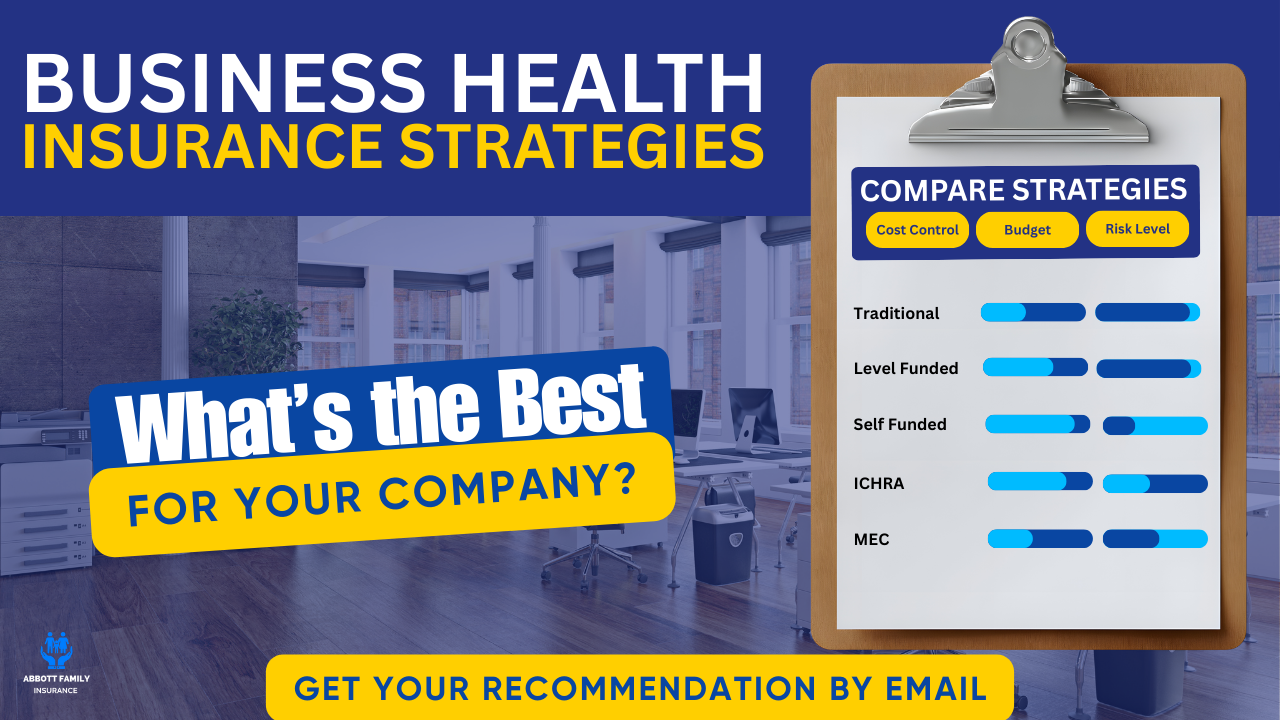
If you are a business owner, choosing the right health benefit strategy can feel overwhelming. Fully insured plans, level funded options, ICHRA, self funded models, and MEC plans all sound promising, but each works very differently.
The challenge is not a lack of options.
The challenge is knowing which option actually makes sense for your business.
Abbott Family Agency helps business owners cut through the confusion. Our goal is simple: help you understand your options, control costs, and make confident benefit decisions. That is why we created our Business Benefit Budget Tool, which allows you to answer a few questions and receive your top recommended strategy directly by email.
Before explaining how the tool works, let us review the most common business health insurance strategies and what makes each one unique.
Why Health Benefit Strategy Matters More Than Ever
Health benefits are often one of the largest expenses a business takes on. They are also one of the most powerful tools for:
Attracting and retaining employees
Supporting workplace satisfaction
Managing long term costs
Staying compliant with regulations
Choosing the wrong strategy can result in rising premiums, employee frustration, or unnecessary financial risk. Choosing the right one can create stability and predictability for years.
Traditional Fully Insured Health Plans
What It Is
A fully insured plan is the most traditional option. The employer pays a fixed monthly premium to an insurance carrier, and the carrier assumes all claims risk.
Why Business Owners Choose It
Predictable monthly costs
Minimal administrative responsibility
Familiar structure
Where It Falls Short
Premiums increase annually regardless of claims
No refund if claims are lower than expected
Limited flexibility
Best for: Smaller businesses that value simplicity and low risk.
Level Funded Health Plans
What It Is
Level funded plans combine elements of fully insured and self funded models. Employers pay a set monthly amount, and unused claim dollars may be refunded at the end of the year.
Key Advantages
Potential cost savings
Fixed monthly payments
Increased transparency
Considerations
Some financial risk
Not ideal for very small groups
Best for: Growing businesses with relatively healthy employee populations.
ICHRA: Individual Coverage Health Reimbursement Arrangement
What It Is
ICHRA allows employers to provide a monthly allowance that employees use to purchase individual health insurance plans that fit their needs.
Why Business Owners Are Choosing ICHRA
Strong cost control for employers
Flexibility for employees
Works well for remote and diverse teams
Things to Consider
Employees must shop for their own coverage
Clear communication and guidance are important
Best for: Businesses seeking predictable healthcare spending and flexibility.
Self Funded Health Plans
What It Is
In a self funded plan, the employer pays employee claims directly instead of paying insurance premiums. Stop loss insurance is typically used to limit exposure.
Pros
Maximum cost control
Custom plan design
Access to detailed claims data
Cons
Higher financial responsibility
Increased administrative involvement
Best for: Larger organizations with strong cash flow and higher risk tolerance.
MEC: Minimum Essential Coverage Plans
What It Is
MEC plans provide basic preventive coverage and help meet ACA compliance requirements. They are not designed to replace comprehensive health insurance.
Why Businesses Use MEC Plans
Very low cost
Helps meet compliance standards
Easy to implement
Limitations
Limited coverage
Often paired with supplemental benefits
Best for: Employers focused on affordability and compliance.
Why Many Business Owners Still Feel Unsure
Even with clear comparisons, many business owners still wonder:
Which option fits my company best?
What works for my budget today and next year?
What will employees actually value?
That uncertainty is exactly what the Business Benefit Budget Tool is designed to solve.
How the Business Benefit Budget Tool Works
The tool is fast, simple, and built specifically for business owners.
Step 1: Answer a Few Questions
You answer questions about:
Company size
Budget goals
Employee needs
Risk tolerance
Step 2: Receive Your Top Recommendation by Email
After completion:
You receive an email with your top recommended benefit strategy
The recommendation is based on your answers
The email explains why that strategy fits your business
Step 3: Move Forward With Confidence
You can review the recommendation on your own time, share it with partners, or prepare for a focused conversation with an advisor.
👉 Start here:
https://www.abbottfamilyagency.com/business-benefit-budget-tool
Why Business Owners Choose Abbott Family Agency
Business owners work with us because we focus on clarity, not pressure.
Independent strategy comparisons
Education first approach
Emphasis on cost control and sustainability
Personalized guidance
Learn more at:
https://www.abbottfamilyagency.com/
Frequently Asked Questions
Is the Business Benefit Budget Tool free?
Yes. The tool is completely free and educational.
How long does it take to complete?
Most business owners finish in just a few minutes.
What happens after I receive my email recommendation?
You can review it independently or request a consultation for deeper guidance.
Is the recommendation a sales pitch?
No. The recommendation is designed to provide clarity and direction.
Can I change strategies later?
Yes. Many businesses evolve their benefit strategy as they grow.
Is the tool only for small businesses?
No. The tool works for businesses of various sizes.
Conclusion: Stop Guessing and Start Choosing With Confidence
Choosing the right health benefit strategy does not have to be confusing or time consuming. With the right information and the right tools, business owners can make confident decisions that support both their company and their employees.
If you want clarity without pressure, the Business Benefit Budget Tool is the best place to start.
